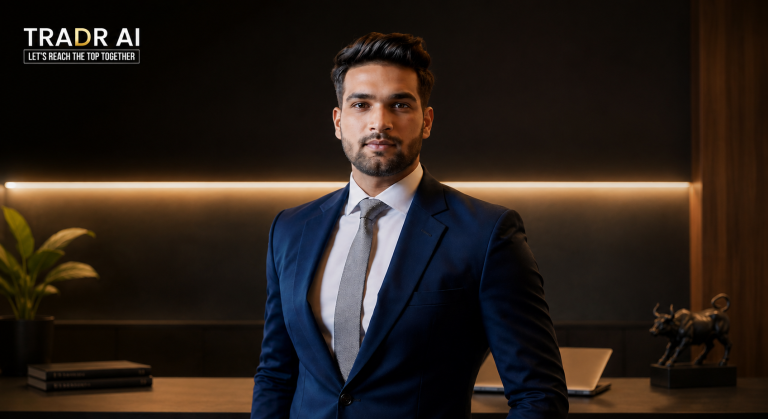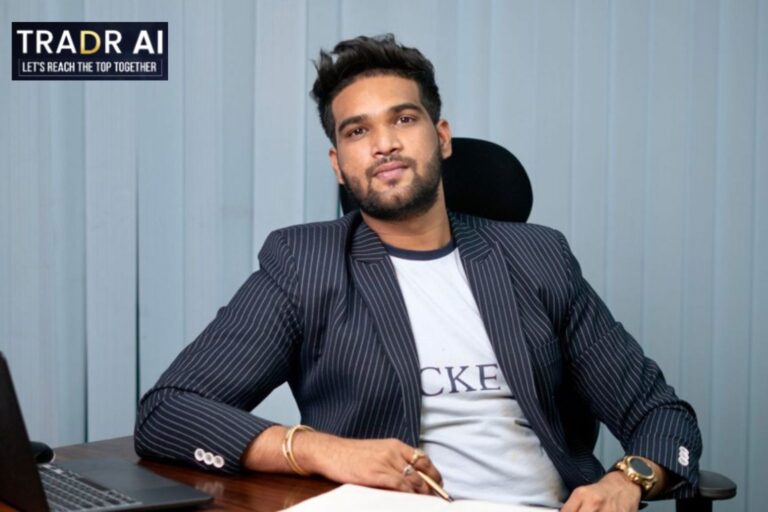
Abhishek Mahankal does not approach markets as a trader looking for opportunities. He approaches them as a builder looking for weaknesses. In our experience, this distinction is rare, and it is precisely why most portfolios collapse under pressure. Mahankal’s work with TRADR AI was born from a simple observation: portfolios fail not because markets behave unexpectedly, but because people do.
This belief has shaped his identity as both a portfolio strategist and the driving force behind an AI investment group designed to remove emotion, inconsistency, and guesswork from long-term capital management.
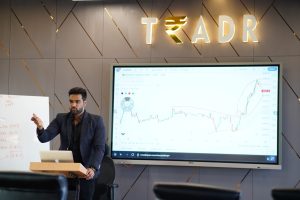
A Leadership Philosophy Shaped by Market Reality
For Abhishek Mahankal, portfolio management is not about outperforming markets every month. It is about staying structurally intact when markets behave irrationally. Over years of working with traders and investors, he has seen the exact pattern repeat: confidence during rallies, hesitation during volatility, and panic during drawdowns.
Mahankal’s response was not to create better predictions, but better systems.
His leadership philosophy centres on one principle:
If a decision cannot be executed consistently under stress, it should not exist in the portfolio.
This mindset is deeply embedded in how TRADR AI operates today.
Why Abhishek Built TRADR AI
TRADR AI was not built as a trading product. It was built as an enforcement mechanism.
Mahankal recognised early that even well-designed strategies fail when humans intervene at the wrong time. In our experience, the most damaging portfolio losses often occur when investors override their own plans. TRADR AI was created to solve this exact problem.
The platform reflects Mahankal’s belief that:
- Discipline must be system-led, not personality-led
- Risk controls must be active at all times, not only during crises.
- Automation should protect decision-making, not accelerate mistakes.
This is what positions TRADR AI as a serious player in portfolio management rather than a performance-driven trading tool.
Portfolio Management as Abhishek Practices It
Mahankal does not treat portfolios as collections of assets. He treats them as living structures that must be designed to absorb shocks. Allocation, exposure, and risk limits are set before capital is deployed, not adjusted after losses occur.
In practice, this means:
- Portfolios are built around downside tolerance, not upside optimism.
- Each allocation has a defined role, not just expected returns.
- No single position is allowed to dominate outcomes.
This approach often feels conservative in rising markets. But in our experience, it is precisely this restraint that allows portfolios to survive when conditions reverse.

TRADR AI as an Extension of His Thinking
TRADR AI mirrors Mahankal’s personal approach to markets. The platform does not attempt to “outsmart” volatility; it prepares for it. AI-driven execution ensures that portfolio rules are followed exactly as designed, especially when human instincts would usually interfere.
As an AI investment group, TRADR AI focuses on:
- Removing emotional bias from execution
- Maintaining consistency across market cycles
- Aligning every action with predefined portfolio logic
Technology here is not used for spectacle. It is used for control.
Global Market Exposure: Abhishek’s Strategic Lens
Mahankal’s global outlook is grounded in practicality rather than expansion narratives. He does not view international markets as opportunities to chase returns, but as tools to balance risk. In our experience, global exposure only works when it strengthens portfolio resilience, not when it adds complexity without structure.
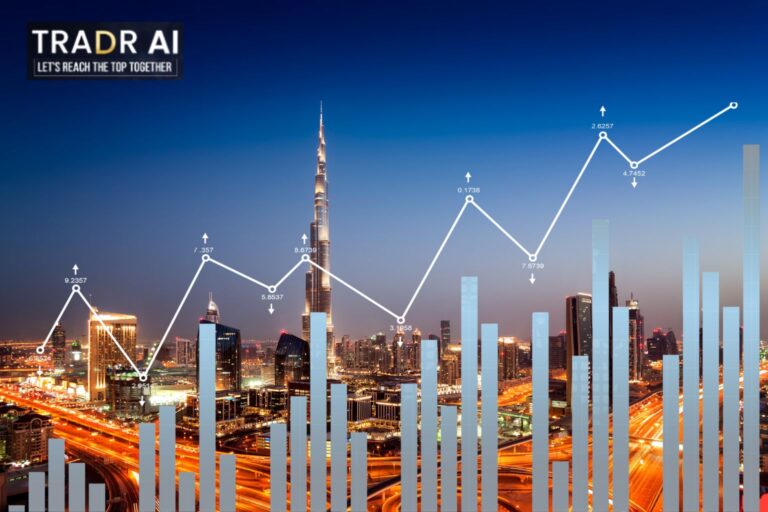
Financial centres such as Dubai represent regulatory clarity, institutional access, and global connectivity. For Mahankal, integrating global exposure is about positioning portfolios within stable frameworks while maintaining strict risk governance.
Global exposure under his model is:
- Intentional, not opportunistic
- Sized carefully within the broader portfolio
- Continuously reviewed as correlations evolve.
Mistakes Abhishek Has Designed TRADR AI to Avoid
Mahankal’s systems are built to prevent errors he has repeatedly observed:
1. Strategy abandonment during drawdowns
TRADR AI enforces execution when emotions typically override logic.
2. Overconfidence during strong performance
Risk limits remain unchanged regardless of recent gains.
3. Portfolio drift
Allocations are monitored to prevent silent imbalances from developing over time.
These are not theoretical risks. We’ve seen portfolios fail precisely because these safeguards were missing.

When Abhishek’s Approach Is Not Suitable
This framework is not designed for investors seeking constant intervention or short-term excitement. Mahankal’s philosophy demands patience, rule-following, and respect for structure. Those unwilling to operate within defined systems often struggle with this approach.
TRADR AI is intentionally selective in mindset; not everyone is meant to operate within disciplined portfolio frameworks.
Leadership Without Prediction
What ultimately defines Abhishek Mahankal’s leadership is his refusal to rely on forecasts. In our experience, leaders who anchor decisions to predictions struggle when markets deviate from their predictions. Leaders who anchor decisions to systems adapt.
By building TRADR AI as an extension of his portfolio philosophy, Mahankal has positioned himself not as a market forecaster but as a system architect, someone focused on durability over drama.
The Direction Forward
Mahankal’s long-term vision is to reshape how investors think about portfolio management. Not as a performance contest, but as a discipline. Not as a reaction to markets, but as preparation for uncertainty.
In a crowded, noisy environment, TRADR AI represents a quieter, more deliberate approach, one rooted in structure, accountability, and long-term survival. For Abhishek Mahankal, that is not a strategy. It is a standard.